
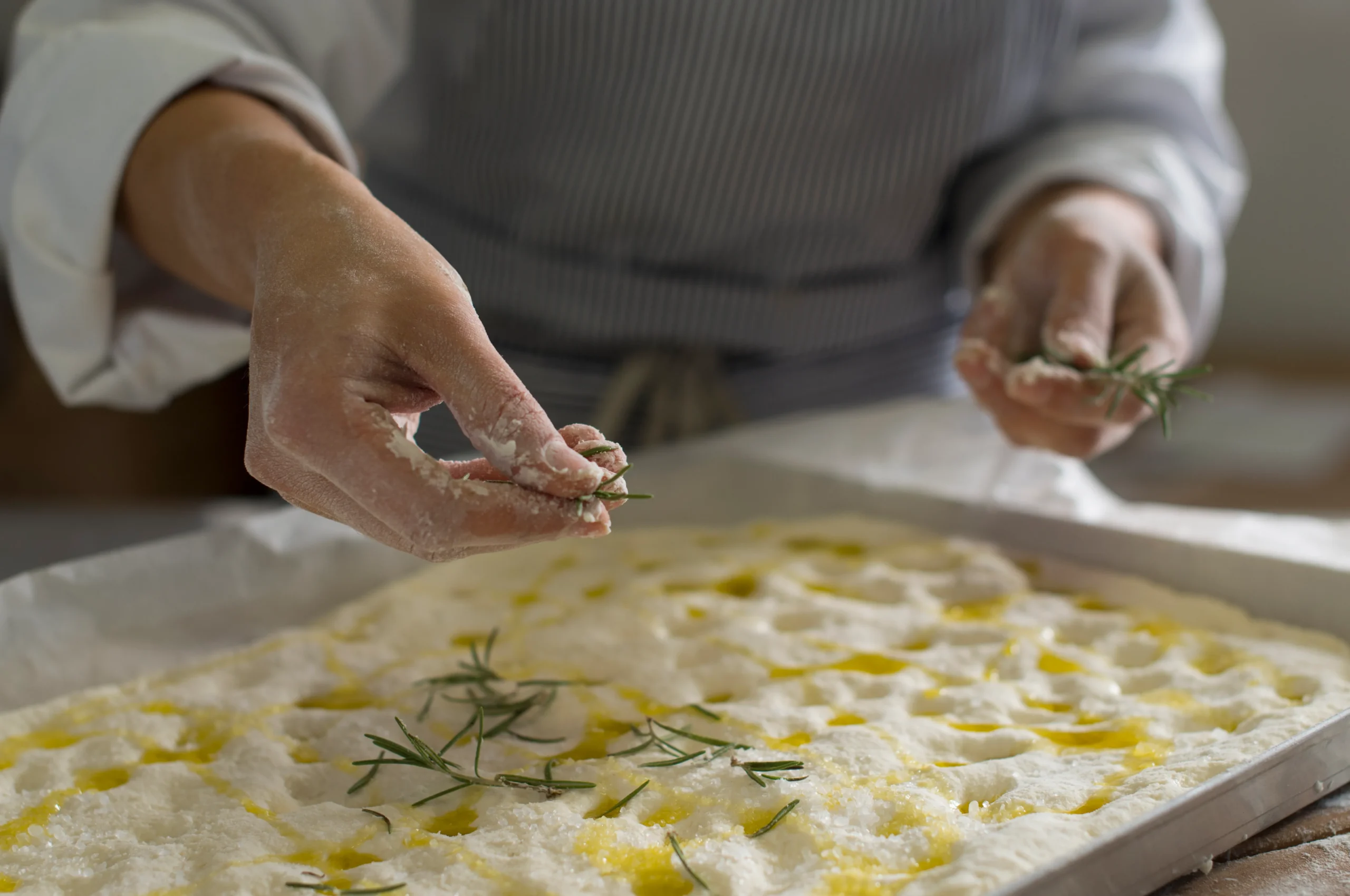
There’s a special kind of satisfaction that comes from baking your own bread. Not the rushed kind you grab from a grocery shelf, but the deeply aromatic, golden, olive oil-kissed focaccia that fills your kitchen with warmth long before it reaches the table. When you tear into a fluffy sourdough focaccia and see those delicate air pockets stretching through the crumb, you realize this bread is more than food—it’s an experience.
If you’ve ever struggled with dense homemade bread or wondered why bakery focaccia tastes lighter and richer than yours, you’re in the right place. This fluffy sourdough focaccia recipe with airy texture will show you exactly how to create bakery-style results in your own kitchen. You’ll learn the secrets behind high hydration dough, proper fermentation, gentle handling, and the techniques that give focaccia its signature cloud-like interior.
Whether you’re new to sourdough baking or already feeding a starter every week, this guide will help you make focaccia that’s crispy on the outside, soft in the middle, and packed with flavor.
What Is Fluffy Sourdough Focaccia?
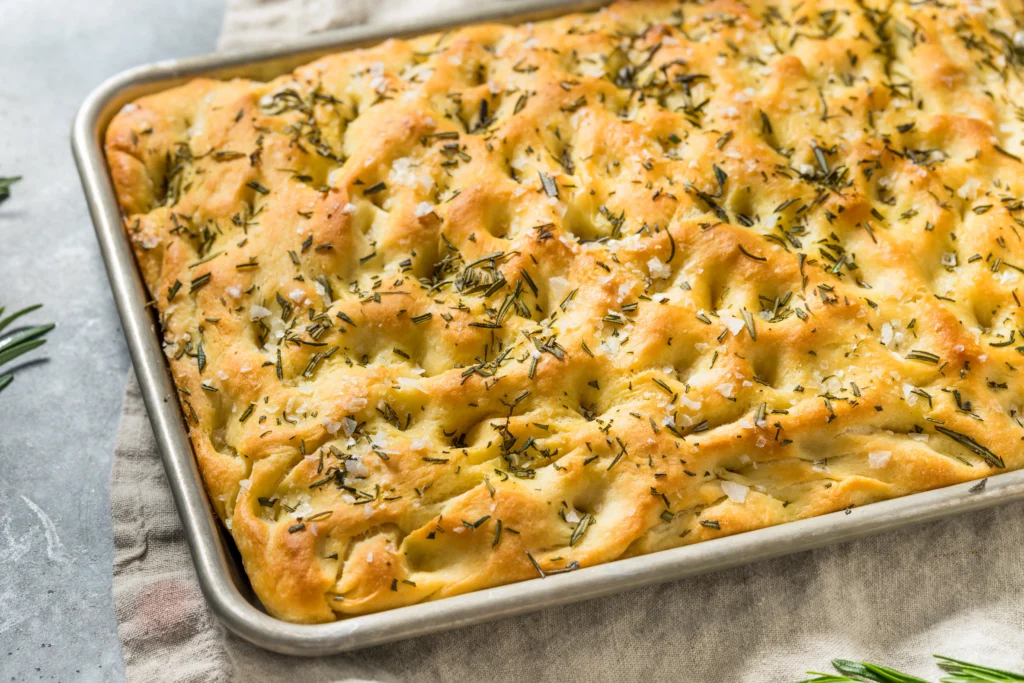
Sourdough focaccia is a naturally leavened Italian flatbread known for its airy structure, crisp edges, and rich olive oil flavor. Unlike sandwich bread, focaccia uses a wetter dough that creates large bubbles and a softer bite.
Traditional focaccia has been baked in Italy for centuries, but sourdough focaccia brings even more depth to the recipe. Instead of relying solely on commercial yeast, the dough ferments slowly with a sourdough starter, developing a complex flavor and lighter texture over time.
What makes fluffy sourdough focaccia stand out is its balance:
- Crispy golden crust
- Moist and airy crumb
- Slight tang from fermentation
- Rich olive oil flavor
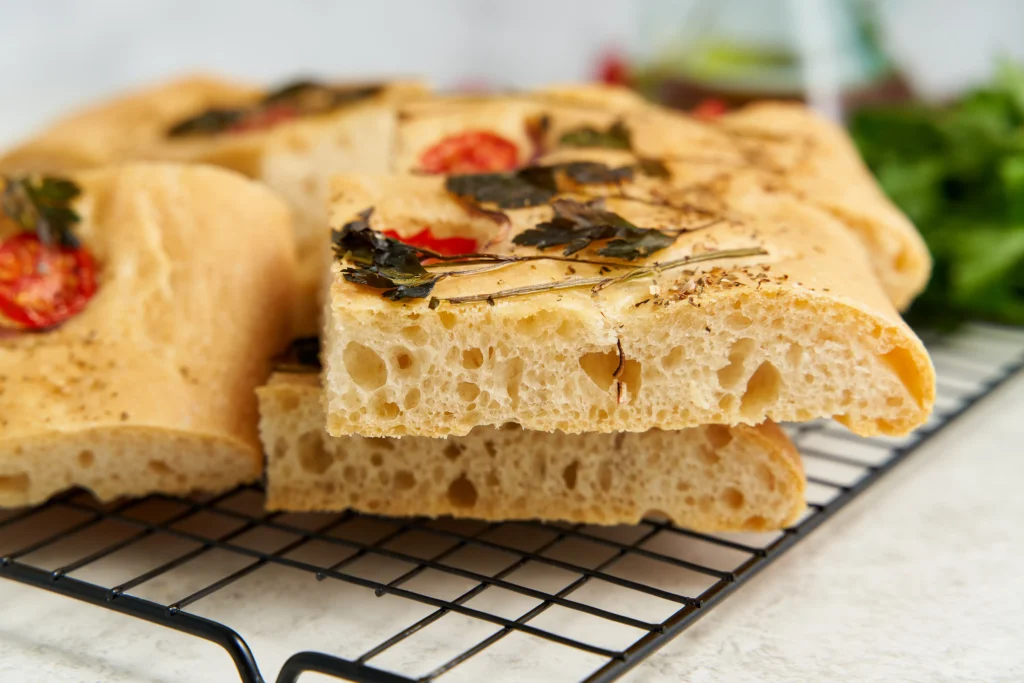
- Beautiful open holes throughout the bread
The long fermentation process also improves texture naturally. As your dough rests, gluten strengthens and gases build inside the dough, forming those iconic air pockets you see in artisan bread.
Why You’ll Love This Fluffy Sourdough Focaccia Recipe
This recipe isn’t complicated, but it does reward patience. Once you taste the result, you’ll understand why homemade focaccia becomes a regular part of so many kitchens.
The Texture Is Light and Airy
One bite tells you everything. Instead of heavy or chewy bread, you get a soft interior filled with delicate bubbles. The crust stays lightly crisp while the center remains tender.
The Flavor Is Richer Than Regular Bread
Commercial yeast bread rises quickly, but sourdough develops flavor slowly. That extra time creates subtle tangy notes and a more complex taste.
It’s Surprisingly Versatile
You can serve fluffy sourdough focaccia with almost anything:
- Pasta dishes
- Soups
- Salads
- Sandwiches
- Olive oil dips
- Charcuterie boards
You can even enjoy it on its own while it’s still warm from the oven.
Natural Fermentation Improves Shelf Life
Because sourdough ferments naturally, your focaccia tends to stay fresher longer compared to standard bread recipes.
Ingredients for Fluffy Sourdough Focaccia
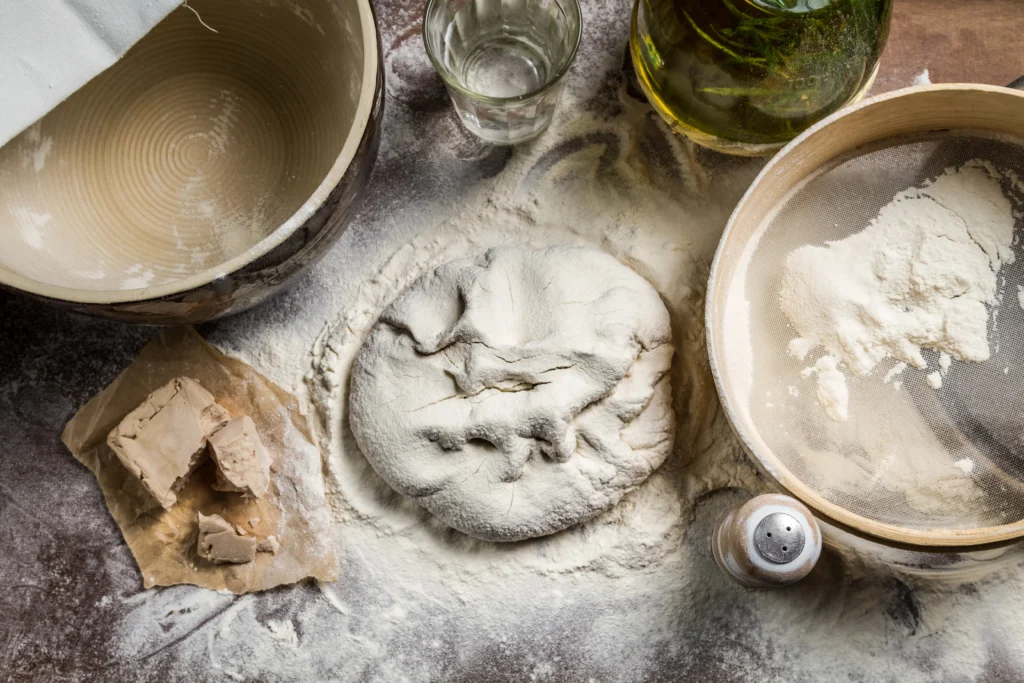
Great focaccia starts with simple ingredients. The quality of each one matters more than you might think.
Essential Ingredients Table
| Ingredient | Quantity | Purpose |
|---|---|---|
| Active sourdough starter | 100g | Natural fermentation |
| Bread flour | 500g | Strong gluten structure |
| Warm water | 400g | Creates airy texture |
| Olive oil | 50g | Flavor and softness |
| Sea salt | 10g | Enhances flavor |
| Honey or sugar | 10g | Supports fermentation |
Why Bread Flour Matters
If you want an airy sourdough focaccia, bread flour is your best option. It contains more protein than all-purpose flour, helping your dough build stronger gluten.
Stronger gluten means:
- Better rise
- More trapped gas
- Larger bubbles
- Improved structure
All-purpose flour can work, but bread flour gives noticeably fluffier results.
Optional Toppings for Extra Flavor
One of the best parts of focaccia is customizing it with toppings.
Popular choices include:
- Fresh rosemary
- Cherry tomatoes
- Roasted garlic
- Parmesan cheese
- Red onions
- Black olives
- Chili flakes
You can keep it simple with olive oil and sea salt or turn it into something loaded with flavor.
Tools You Need for Perfect Airy Focaccia
You don’t need professional bakery equipment, but a few tools make the process easier.
Recommended Baking Equipment
- Large mixing bowl
- Digital kitchen scale
- Bench scraper
- 9×13 baking pan
- Dough scraper
- Parchment paper
Why a Digital Scale Is Important
Bread recipes depend heavily on accuracy. Measuring flour with cups often leads to inconsistent dough hydration.
Using a kitchen scale helps you:
- Measure hydration precisely
- Achieve consistent results
- Avoid overly dry dough
- Improve fermentation accuracy
If you want bakery-quality sourdough focaccia, a scale is one of the best investments you can make.
Step-by-Step Fluffy Sourdough Focaccia Recipe
Now comes the fun part—making the dough.
Step 1 – Feed Your Sourdough Starter
Your starter should be active and bubbly before you begin. Ideally, it should double in size within several hours after feeding.
Signs your starter is ready:
- Puffy appearance
- Pleasant sour smell
- Visible bubbles
- Passes the float test
A weak starter often leads to dense focaccia, so don’t rush this step.
Step 2 – Mix the Dough
In a large bowl:
- Combine warm water and sourdough starter
- Stir until dissolved
- Add flour and mix until shaggy
- Let rest for 30 minutes
- Add salt and olive oil
This resting period is called the autolyse. It allows flour to absorb water fully and helps gluten develop naturally.
At first, your dough may seem sticky. That’s completely normal. High hydration dough creates the airy texture you’re aiming for.
Step 3 – Use the Stretch and Fold Technique
Instead of kneading traditionally, you’ll strengthen the dough through stretch and folds.
Stretch and Fold Schedule
| Round | Rest Time |
|---|---|
| First Fold | 30 minutes |
| Second Fold | 30 minutes |
| Third Fold | 30 minutes |
| Fourth Fold | 30 minutes |
During each round:
- Wet your hands
- Grab one side of the dough
- Stretch upward gently
- Fold over itself
- Rotate bowl and repeat
This process traps air while building gluten strength without deflating the dough.
Step 4 – Bulk Fermentation
After the folds, allow your dough to rise until it becomes noticeably puffy.
Depending on room temperature, this may take:
- 4 to 8 hours at room temperature
- Overnight in the refrigerator
Signs your dough is ready:
- Increased volume
- Jiggly texture
- Visible bubbles
- Soft and airy feel
Cold fermentation overnight often improves both flavor and texture.
Step 5 – Transfer Dough to the Pan
Generously coat your baking pan with olive oil.
Carefully transfer the dough without pressing out too much air. Gently stretch it toward the corners of the pan.
If the dough resists stretching:
- Let it rest 15 minutes
- Try again gently
Avoid forcing it aggressively or you’ll lose the airy structure.
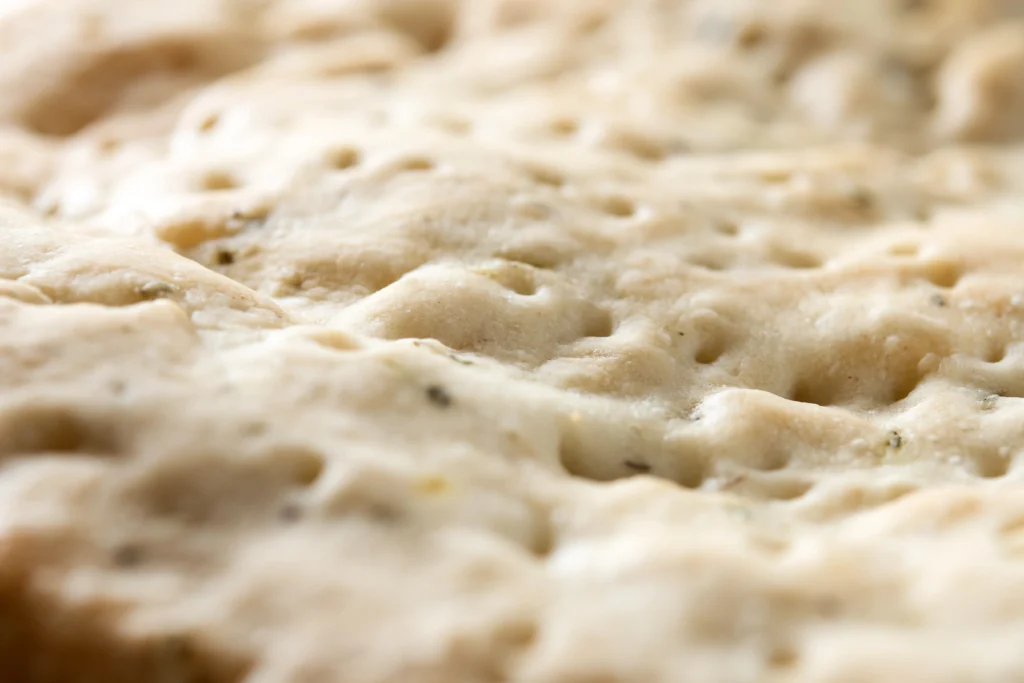
Step 6 – Second Rise and Dimpling
Allow the dough to proof again until puffy.
Once ready:
- Drizzle olive oil over the surface
- Use your fingertips to create dimples
- Add toppings
The dimples help:
- Prevent oversized bubbles
- Hold olive oil
- Create focaccia’s classic appearance
This step also gives the bread its irresistible texture after baking.
Step 7 – Bake Until Golden
Bake your fluffy sourdough focaccia at 425°F (220°C).
Baking Guide
| Oven Temperature | Baking Time |
|---|---|
| 425°F (220°C) | 25–30 minutes |
You’ll know it’s ready when:
- The top turns golden brown
- The edges crisp beautifully
- The bottom sounds hollow when tapped
Allow the focaccia to cool slightly before slicing.
The hardest part may be waiting.
Secrets to Achieving an Airy Texture
Many homemade focaccia recipes turn out flat or dense because of a few common mistakes. Small adjustments make a huge difference.
Use High Hydration Dough
Wet dough creates steam during baking, helping bubbles expand beautifully.
A dry dough usually produces:
- Tight crumb
- Smaller holes
- Heavier texture
Sticky dough may feel intimidating, but it’s essential for fluffy focaccia.
Don’t Overhandle the Dough
Gentle handling preserves air pockets formed during fermentation.
Avoid:
- Aggressive kneading
- Excess flour during shaping
- Pressing dough too firmly
Treat the dough delicately and it rewards you with incredible texture.
Allow Enough Fermentation Time
Underproofed dough lacks volume and flavor.
If your kitchen is cool, fermentation takes longer. Patience matters more than strict timing.
Watch the dough—not the clock.
Use Plenty of Olive Oil
Olive oil does more than add flavor.
It helps create:
- Crispy edges
- Moist crumb
- Rich taste
- Better browning
Don’t be shy with it.
Delicious Variations of Fluffy Sourdough Focaccia
Once you master the base recipe, you can experiment endlessly.
Rosemary Garlic Focaccia
A timeless combination with bold aroma and savory depth.
Best for:
- Soup pairings
- Pasta dinners
- Olive oil dipping
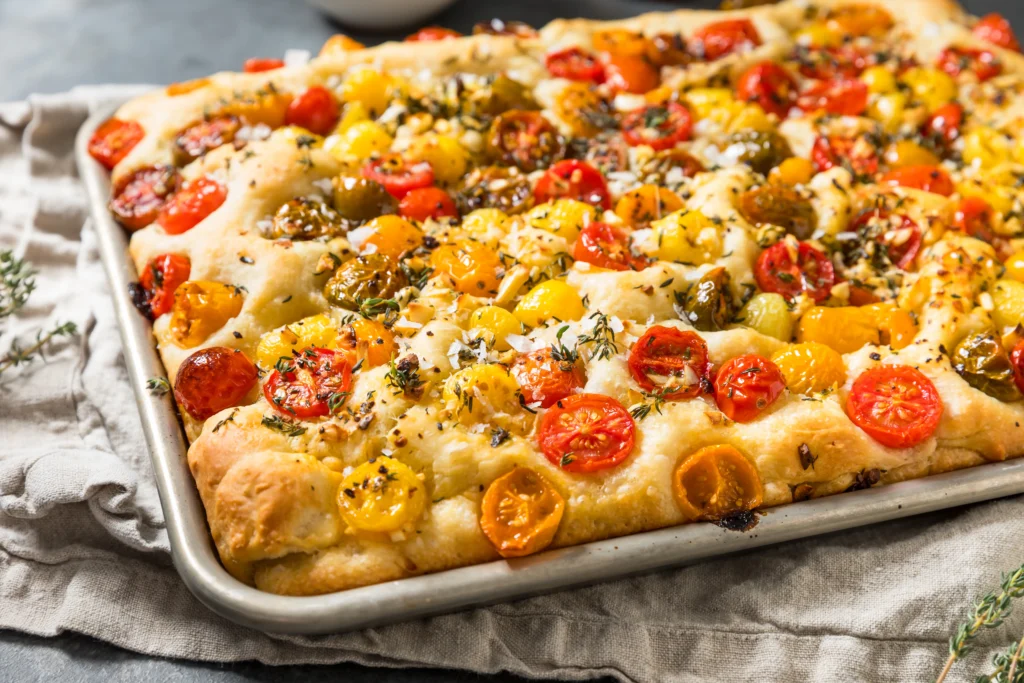
Tomato Basil Focaccia
Fresh cherry tomatoes burst during baking, adding sweetness and moisture.
Top with:
- Basil leaves
- Flaky sea salt
- Garlic oil
Cheese-Stuffed Focaccia
Add mozzarella or parmesan for extra richness.
Popular options:
- Mozzarella
- Fontina
- Parmesan
- Asiago
Mediterranean Olive Focaccia
Add olives, herbs, and roasted peppers for Mediterranean flavor.
Perfect for:
- Appetizers
- Sandwiches
- Charcuterie boards
How to Store and Reheat Sourdough Focaccia
Fresh focaccia tastes best the day it’s baked, but you can still keep leftovers delicious.
Storage Tips
Room Temperature
Store in an airtight container for up to 2 days.
Refrigerator
Store up to 5 days, though refrigeration may slightly dry the bread.
Freezer
Wrap tightly and freeze for up to 2 months.
Best Way to Reheat
To restore crispness:
- Preheat oven to 350°F
- Sprinkle lightly with water
- Heat for 5–8 minutes
Avoid microwaving if possible, since it softens the crust too much.
What to Serve with Fluffy Sourdough Focaccia
This bread pairs beautifully with countless meals.
Great Pairings Include
- Tomato soup
- Creamy pasta
- Grilled chicken
- Caesar salad
- Olive tapenade
- Cheese boards
You can also slice it horizontally and use it for sandwiches.
Nutritional Information
Estimated Nutrition Per Serving
| Nutrient | Amount |
|---|---|
| Calories | 220 |
| Carbohydrates | 35g |
| Protein | 6g |
| Fat | 7g |
| Fiber | 2g |
Values may vary depending on toppings and portion size.
Frequently Asked Questions About Fluffy Sourdough Focaccia
Why Is My Sourdough Focaccia Dense?
Dense focaccia usually comes from:
- Weak starter
- Underproofing
- Low hydration dough
- Overhandling
Make sure your starter is active and your dough has enough time to ferment fully.
Can You Refrigerate Focaccia Dough Overnight?
Yes. Cold fermentation often improves flavor and texture significantly.
Overnight proofing also makes scheduling easier since you can bake the next day.
What Flour Works Best for Airy Sourdough Focaccia?
Bread flour is ideal because its higher protein content develops stronger gluten.
That stronger structure helps trap gases and creates larger air bubbles.
How Do You Get Bigger Air Bubbles in Focaccia?
To achieve large bubbles:
- Use high hydration dough
- Ferment properly
- Handle dough gently
- Avoid pressing out trapped air
Those bubbles are a sign your fermentation worked correctly.
Final Thoughts on Making Fluffy Sourdough Focaccia
Once you bake your first successful fluffy sourdough focaccia, it’s hard to go back to ordinary bread. The combination of crispy edges, airy crumb, and rich sourdough flavor creates something that feels rustic yet deeply comforting.
The best part is that each batch teaches you something new. You begin noticing how fermentation changes with temperature, how hydration affects texture, and how small adjustments improve the final loaf.
So don’t worry if your first attempt isn’t perfect. Great focaccia comes from practice, patience, and learning how dough behaves.
Now it’s your turn to try it.
Grab your starter, pour the olive oil generously, and fill your kitchen with the smell of homemade focaccia that tastes every bit as good as it looks.
If you enjoyed this fluffy sourdough focaccia recipe with airy texture, share it with fellow bread lovers or leave a comment about your favorite toppings and baking results.
Table of Contents
Peanut Butter Fudge Recipe: The Easiest 3-Ingredient Treat You’ll Ever Make – labelrecipes.com