
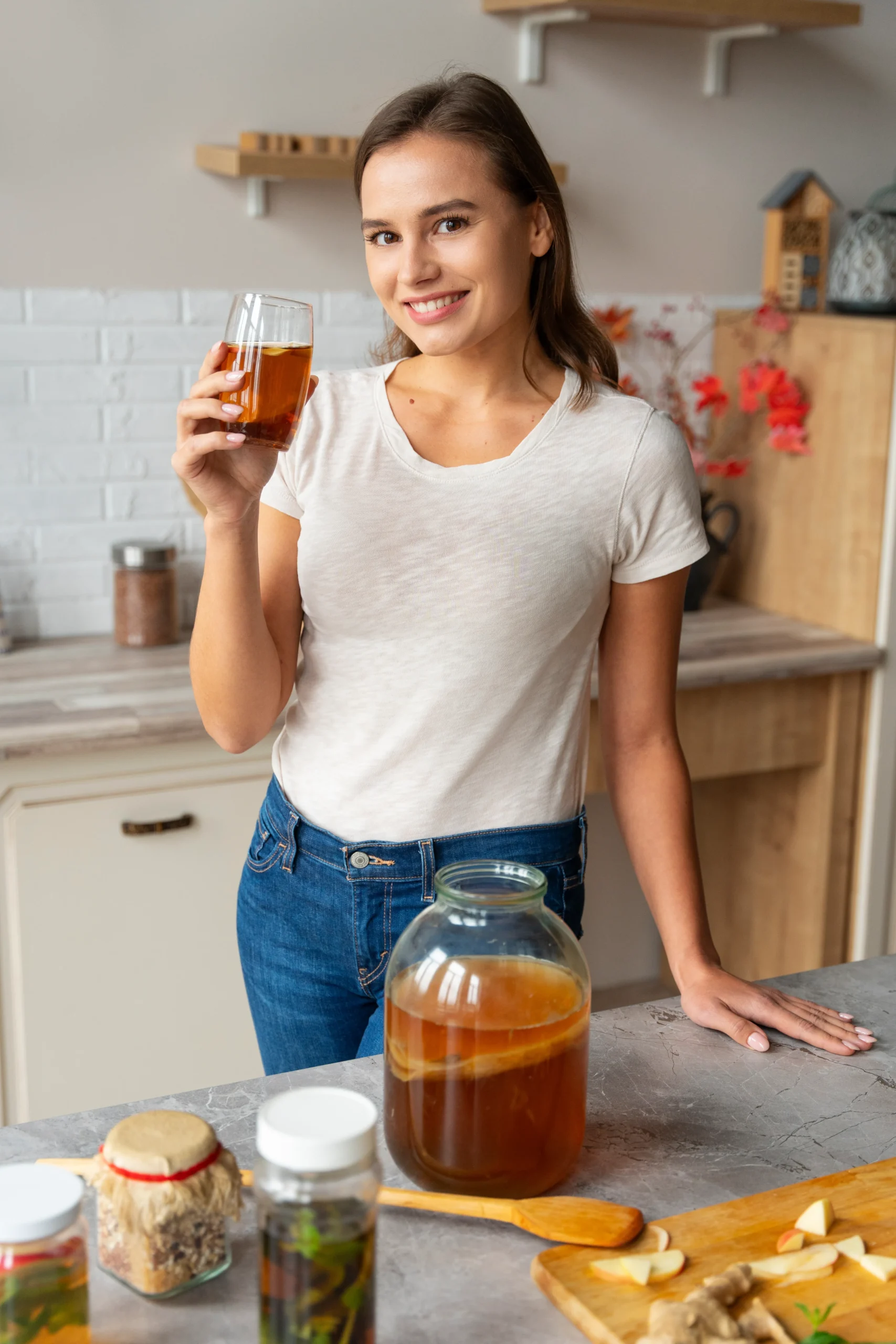
If you’ve ever taken a sip of homemade kombucha and compared it to most store-bought bottles, you already know the difference. Authentic kombucha has depth, balance, and a living character that mass-produced versions rarely deliver. It tastes real. It feels alive. And most importantly, it reminds you that something powerful doesn’t need to be complicated.
When you brew kombucha at home, you’re not just making a drink. You’re continuing a tradition that goes back centuries. You’re working with time, patience, and a few simple ingredients to create something nourishing and satisfying. This authentic kombucha recipe proves that you don’t need fancy tools, flavorings, or additives. You only need four ingredients and a bit of attention.
In this guide, you’ll learn exactly how to make real kombucha the traditional way, why each ingredient matters, and how to avoid common mistakes so your brew turns out clean, balanced, and safe every time.
What Is Kombucha and Why Authenticity Matters
What Is Authentic Kombucha?
Authentic kombucha is a naturally fermented tea made using sweetened tea and a living culture known as a SCOBY (Symbiotic Culture of Bacteria and Yeast). Through fermentation, sugar is gradually consumed by the culture, transforming the tea into a lightly fizzy, tangy beverage.
What makes kombucha authentic is not branding or flavor variety. It’s the process.
Authentic kombucha:
- Uses simple ingredients
- Relies on natural fermentation
- Contains live cultures
- Develops flavor over time, not instantly
Unlike many commercial versions, traditional kombucha is not rushed, pasteurized, or overloaded with sweeteners.
Why Only 4 Ingredients Are Enough
You may be surprised to learn that kombucha doesn’t need fruit juice, herbs, or special powders to work. In fact, the fewer ingredients you use, the more stable and predictable your fermentation becomes.
Using only four ingredients:
- Reduces the risk of contamination
- Makes fermentation easier to control
- Preserves the natural balance of the culture
- Keeps the recipe beginner-friendly
When it comes to fermentation, simplicity is not a limitation. It’s an advantage.
The 4 Ingredients You Need for an Authentic Kombucha Recipe
Ingredient Breakdown and Purpose
Below is a simple table outlining everything you need and why each ingredient matters.
| Ingredient | Quantity | Purpose |
|---|---|---|
| Water | 1 liter | Forms the base of the brew |
| Black or Green Tea | 1 tea bag or 1 tsp loose leaf | Provides nutrients for the culture |
| White Sugar | 70–80 grams | Feeds the SCOBY during fermentation |
| SCOBY + Starter Tea | 1 SCOBY + 100 ml starter | Drives fermentation |
Each ingredient plays a specific role. Removing or replacing one can disrupt the process, especially if you’re just starting.
Step-by-Step Authentic Kombucha Recipe (Beginner Friendly)
Step 1: Prepare the Sweet Tea
Start by bringing your water to a boil. Once boiling, remove it from heat and add your tea.
Allow the tea to steep fully, then dissolve the sugar while the liquid is still hot. Stir until the sugar is completely dissolved.
Important:
Let the sweet tea cool to room temperature. Adding a SCOBY to hot liquid can damage or kill the culture.
Step 2: Add the SCOBY and Starter Tea
Once your tea has cooled:
- Pour it into a clean glass jar
- Add the starter tea
- Gently place the SCOBY on top
It may float, sink, or rest sideways. All of these positions are normal.
Avoid using metal containers or utensils at this stage. Glass is always the safest option.
Step 3: Fermentation Process
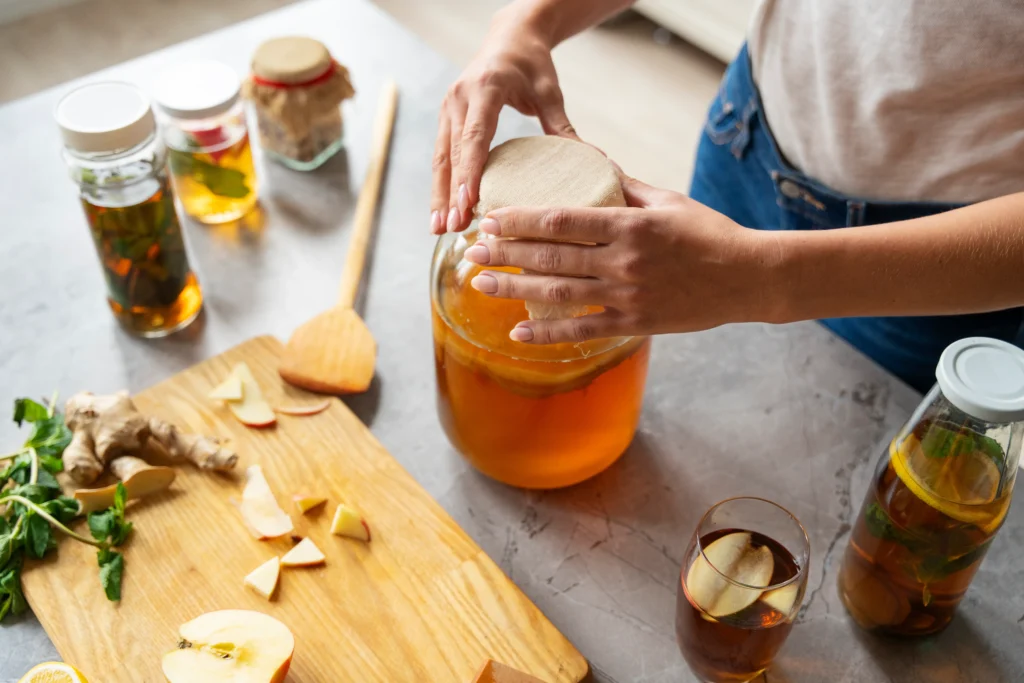
Cover the jar with a breathable cloth and secure it with a rubber band. This allows airflow while keeping dust and insects out.
Place the jar in a warm, dark spot where it won’t be disturbed.
Fermentation timeline:
- Days 1–3: Sweet, mild flavor
- Days 4–7: Balanced sweet-tangy taste
- Days 8–14: More acidic and bold
Temperature plays a big role. Warmer environments speed up fermentation, while cooler ones slow it down.
How to Know When Your Kombucha Is Ready
Taste, Smell, and Visual Signs
The best way to decide when your kombucha is ready is by tasting it.
Signs your kombucha is fermenting properly:
- A clean, slightly sour smell
- A thin new SCOBY forming on the surface
- A taste that balances sweetness and acidity
If it tastes too sweet, let it ferment longer. If it’s too sharp, shorten the fermentation time for your next batch.
Trust your senses. Authentic kombucha tells you when it’s ready.
Common Mistakes to Avoid When Making Authentic Kombucha
Beginner Errors That Affect Fermentation
Even simple recipes can go wrong if certain mistakes are made. Here are the most common ones to avoid.
- Using flavored or scented teas
- Replacing sugar with honey or artificial sweeteners
- Washing the SCOBY with soap
- Using plastic or metal containers
- Fermenting in a cold environment
Key reminder:
Stick to traditional methods until you’re confident with the process.
Health Benefits of Authentic Kombucha
Why Homemade Kombucha Is Better
When brewed correctly, authentic kombucha can support overall wellness as part of a balanced lifestyle.
Potential benefits include:
- Naturally occurring probiotics
- Support for digestion
- Lower residual sugar than many commercial drinks
- No preservatives or artificial additives
Homemade kombucha gives you full control over fermentation time, sweetness, and ingredient quality.
Flavoring After Fermentation (Optional and Traditional-Friendly)
Second Fermentation Options
Once your primary fermentation is complete, you can enjoy kombucha as is or add flavor naturally.
Popular second-fermentation options include:
- Fresh ginger
- Lemon slices
- Crushed berries
Add flavorings to bottled kombucha and allow it to ferment for an additional 1–3 days before refrigerating.
Always release pressure carefully, as natural carbonation can build quickly.
Storage and Shelf Life of Homemade Kombucha
How to Store Kombucha Safely
Once fermentation is complete:
- Store kombucha in glass bottles
- Refrigerate to slow fermentation
- Consume within 2–4 weeks for best flavor
Cold storage doesn’t stop fermentation completely, but it keeps flavors stable and refreshing.
FAQ: Authentic Kombucha Recipe With Only 4 Ingredients
Can beginners make an authentic kombucha recipe at home?
Yes. This authentic kombucha recipe uses minimal ingredients and simple steps, making it ideal for beginners.
Why does an authentic kombucha recipe use sugar?
Sugar feeds the SCOBY. Most of it is consumed during fermentation, leaving a balanced final drink.
How long does authentic kombucha take to ferment?
Fermentation typically takes 7 to 14 days, depending on temperature and taste preference.
Is homemade kombucha safe to drink?
Yes, when brewed hygienically and following traditional methods.
Can you reuse the SCOBY?
Absolutely. A healthy SCOBY can be reused many times and will continue to grow new layers.
Conclusion: Brewing Authentic Kombucha Is Simpler Than You Think
Making kombucha doesn’t require advanced skills or complicated ingredients. With patience, care, and respect for the process, you can create a living beverage that reflects tradition and simplicity.
This authentic kombucha recipe shows you that real fermentation is accessible, rewarding, and deeply satisfying. Once you master the basics, each batch becomes a personal ritual rather than a recipe.
Strong Call to Action
Now it’s your turn.
Start your first batch this week.
Taste the difference real fermentation makes.
Share your experience, your questions, or your results with others exploring authentic kombucha.
If you found this guide helpful, save it, share it, and come back to refine your brewing skills. Authentic kombucha isn’t about perfection. It’s about consistency, curiosity, and letting nature do the work.
Table of Contents
Japanese Onigiri Recipe Made Easy for Lunch or Snacks – labelrecipes.com