

When you need a dinner that feels like a treat without turning your grocery receipt into a surprise, Baked Potato Casserole is exactly the kind of recipe you want in your back pocket. It takes familiar ingredients—potatoes, cheese, bacon, sour cream, butter, and a few seasonings—and turns them into a bubbling, golden casserole that feels made for a family gathering.
You don’t need expensive ingredients or complicated cooking techniques. In fact, this recipe is built around foods you may already have at home. With smart shopping and careful portions, you can aim to prepare the casserole for around $12 or less, although your actual cost will depend on local prices, brands, package sizes, and where you shop.
What makes this potato casserole especially useful is its flexibility. You can serve it beside roasted chicken or steak, bring it to a potluck, make it for a holiday dinner, or turn it into a complete meal by adding chicken and vegetables.
The result is creamy, cheesy, savory comfort food with crisp bacon on top—and a recipe that’s easy enough for an ordinary weeknight.
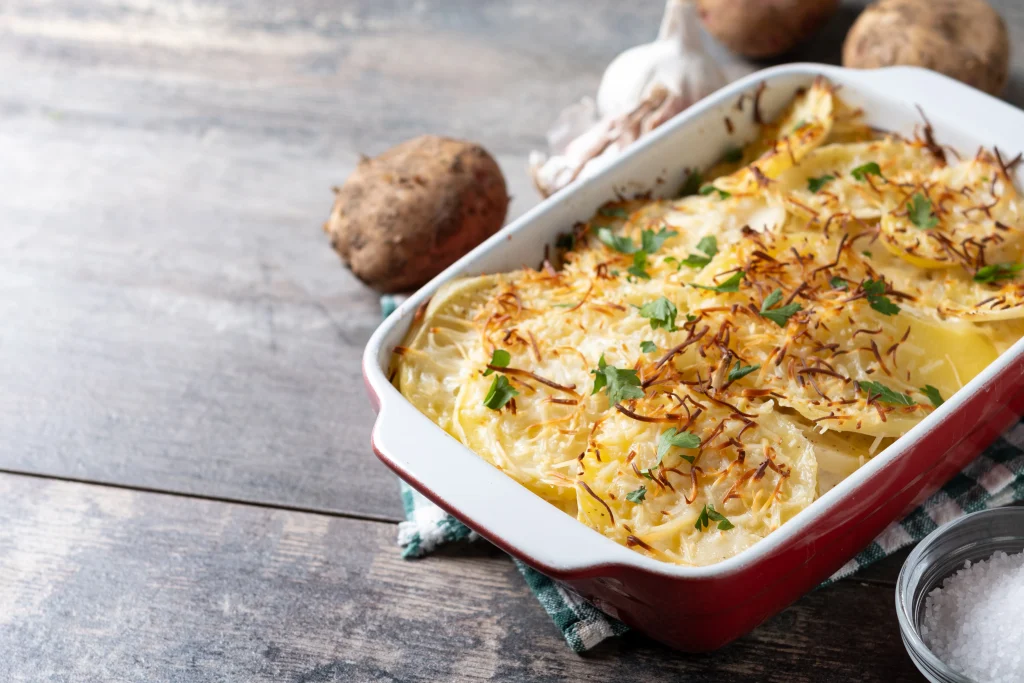
Why This Baked Potato Casserole Is Perfect for a Budget Meal
A good budget recipe should do more than save money. You want something filling, flavorful, practical, and easy enough to prepare without spending your entire evening in the kitchen.
This Baked Potato Casserole checks those boxes.
Potatoes provide the hearty base, while cheddar delivers plenty of flavor and a creamy finish. Sour cream adds tanginess, butter adds richness, and bacon gives the casserole that familiar loaded-baked-potato taste.
You can also stretch the recipe by adding inexpensive vegetables or leftover cooked chicken.
What Makes Baked Potato Casserole So Affordable?
The recipe relies on everyday ingredients rather than specialty products:
- Russet potatoes
- Cheddar cheese
- Bacon
- Sour cream
- Milk
- Butter
- Green onions
- Garlic powder
- Salt and pepper
Potatoes are particularly useful in budget cooking because they can serve as the foundation of a meal while working with countless other ingredients.
You also don’t need a huge amount of bacon. When you cook it until crisp and crumble it into small pieces, a modest quantity can flavor the entire casserole.
The same principle applies to cheese. A flavorful sharp cheddar can provide plenty of character without requiring an excessive amount.
Estimated Cost of the Baked Potato Casserole
Your grocery-store total will vary, so consider the following a planning estimate rather than a guaranteed checkout price.
| Ingredient | Amount Used | Estimated Cost |
|---|---|---|
| Russet potatoes | 2½–3 lb | $2.50–$3.50 |
| Sharp cheddar | 2 cups | $2.50–$3.50 |
| Bacon | 6 oz | $1.50–$2.50 |
| Sour cream | 1 cup | $1.00–$1.50 |
| Milk | ½ cup | $0.25–$0.50 |
| Butter | 2 tbsp | $0.20–$0.40 |
| Green onions | 3–4 | $0.50–$1.00 |
| Seasonings | As needed | $0.10–$0.25 |
Because the upper end of these estimates can exceed $12, you’ll want to compare prices and use store brands if your goal is a strict under-$12 ingredient budget. Another important distinction is whether you’re calculating the cost of the quantities used or the amount you actually pay for full packages.
That distinction is worth mentioning in any recipe advertised as a specific dollar amount.
Baked Potato Casserole Ingredients
The ingredient list is short, but every component has a purpose.
Essential Ingredients for Baked Potato Casserole
| Ingredient | Quantity | Purpose |
| Russet potatoes | 2½–3 lb | Hearty casserole base |
| Sharp cheddar cheese | 2 cups, shredded | Rich, cheesy flavor |
| Bacon | 6 oz, cooked and crumbled | Smoky, savory topping |
| Sour cream | 1 cup | Creaminess and tang |
| Milk | ½ cup | Creates a softer, smoother mixture |
| Butter | 2 tbsp | Adds richness |
| Green onions | 3–4, sliced | Fresh flavor and color |
| Garlic powder | ½ tsp | Savory depth |
| Salt | To taste | Enhances flavor |
| Black pepper | To taste | Adds mild heat |
Best Potatoes for This Casserole
For a fluffy Baked Potato Casserole, Russet potatoes are an excellent choice.
Their relatively high starch content gives you a soft, fluffy interior that works well when mashed or lightly broken apart.
Yukon Gold potatoes are another good option. They have a naturally buttery texture and slightly richer flavor.
If you prefer more texture in your casserole, don’t mash the potatoes until completely smooth. Leaving some small chunks creates a dish that feels closer to a loaded baked potato than traditional mashed potatoes.
Can You Use Leftover Baked Potatoes?
Yes.
In fact, leftover baked potatoes can make this recipe even easier.
If you already have cooked potatoes in the refrigerator, simply cut or roughly mash them and combine them with the sour cream, butter, milk, cheese, and seasonings.
Make sure leftovers have been stored safely. The USDA recommends refrigerating cooked leftovers promptly and generally using them within three to four days.
How to Make Baked Potato Casserole
Once your ingredients are prepared, assembling the casserole is straightforward.
Step 1: Prepare the Potatoes
Start by washing and scrubbing your potatoes.
Peel them if you prefer a smoother casserole, or leave the skins on for more texture and a rustic appearance.
Cut the potatoes into evenly sized chunks. Keeping the pieces similar in size helps them cook at approximately the same rate.
Place them in a large pot of salted water and bring to a boil.
Cook until the potatoes are fork-tender.
Drain them thoroughly and allow them to sit for a minute or two so excess moisture can evaporate.
Step 2: Prepare the Bacon
While the potatoes cook, prepare your bacon.
Cook it until crisp, then transfer it to a paper towel-lined plate to remove excess grease.
Once cool enough to handle, crumble the bacon into small pieces.
Reserve a portion for the top of the casserole. That gives you a delicious crispy finish in every serving.
Step 3: Make the Creamy Potato Mixture
Place the cooked potatoes in a large bowl.
Add:
- Butter
- Sour cream
- Milk
- Garlic powder
- Black pepper
- Salt
Mash gently.
You don’t want perfectly smooth mashed potatoes. A few small pieces give the finished casserole a more interesting texture.
Fold in about half of the shredded cheddar and some of the crumbled bacon.
Taste the mixture before transferring it to the baking dish.
This is your opportunity to adjust the seasoning.
Step 4: Assemble the Casserole
Lightly grease a baking dish.
Spread the potato mixture evenly inside.
Sprinkle the remaining cheddar over the surface.
Add the reserved bacon and sliced green onions.
For an especially attractive finish, keep a little green onion aside and add it immediately after baking.
Step 5: Bake Until Golden and Bubbly
Bake the casserole until the cheese has melted completely and the edges are bubbling.
The exact cooking time will depend on the depth of your casserole and whether you’re starting with warm or chilled ingredients.
You’re looking for a hot center, melted cheese, and a lightly golden surface.
Let the casserole rest for several minutes before serving.
That short resting period allows the creamy mixture to settle and makes it easier to spoon onto plates.
Tips for Making the Best Baked Potato Casserole
Small details can make the difference between a creamy, flavorful casserole and one that’s watery or gummy.
Don’t Overcook the Potatoes
Potatoes should be tender enough to mash, but you don’t want them sitting in boiling water long after they’re done.
Excess water can make the finished casserole loose.
Drain them thoroughly before mixing.
Don’t Overmix
This is particularly important with potatoes.
Mash gently and stop once you’ve reached the texture you like.
Overworking potatoes can make them sticky or gummy.
Use Freshly Shredded Cheese
For the smoothest melting, shred your cheddar from a block if possible.
Pre-shredded cheese is convenient, but freshly shredded cheese often gives you better control over the texture.
Sharp cheddar is particularly useful because its stronger flavor means you don’t need to rely solely on a large quantity of cheese.
Season Every Layer
Potatoes can absorb a surprising amount of seasoning.
Start conservatively, taste the potato mixture, and adjust before assembling.
Remember that bacon and cheddar already contribute salt, so adding too much salt at the beginning can leave you with an overly salty casserole.
How to Get a Golden, Cheesy Top
For a beautiful finish:
- Reserve some cheddar for the top.
- Sprinkle bacon over the cheese.
- Bake uncovered.
- Watch the casserole carefully toward the end.
- If desired, briefly use the broiler for extra browning.
If you use the broiler, don’t walk away. Cheese can go from beautifully browned to burned surprisingly quickly.
How to Keep Baked Potato Casserole Under $12
If the budget is part of the appeal, your shopping strategy matters.
Choose Affordable Potato Varieties
Compare the price per pound rather than focusing only on the package price.
A larger bag may be cheaper per pound, but only buy it if you’ll use the remaining potatoes.
You can also use potatoes you already have at home. That immediately reduces the additional grocery cost of the recipe.
Make the Cheese Work Harder
Cheese can become one of the more expensive ingredients in a casserole.
A few simple tricks help:
- Compare block and pre-shredded prices.
- Look at the price per ounce.
- Choose sharp cheddar for stronger flavor.
- Use part cheddar and part mozzarella if desired.
- Buy cheese that you can use in other recipes.
Use Bacon Strategically
You don’t need bacon covering every inch of the casserole.
Cook it until crisp, crumble it finely, and distribute it throughout the dish.
You can also use leftover cooked bacon if you have some available.
The goal is to get that smoky flavor without letting bacon dominate your grocery budget.
Calculate the Cost Per Serving
A simple formula makes your budget easier to understand:
Total cost of ingredients used ÷ number of servings = estimated cost per serving
For example, if your ingredients used cost $10.80 and the casserole makes six servings:
$10.80 ÷ 6 = $1.80 per serving
This is a useful figure to include in your recipe because it gives readers a better idea of the meal’s value.
Baked Potato Casserole Variations
Once you’ve made the basic version, you can easily create several different meals from the same idea.
Loaded Baked Potato Casserole
For the classic loaded-potato experience, add:
- Extra cheddar
- Crispy bacon
- Sour cream
- Green onions
- Black pepper
You can even place a small bowl of sour cream on the table so everyone can add their own.
Baked Potato Casserole With Chicken
Add cooked shredded chicken for a more substantial dinner.
This is a particularly good way to use leftover roast chicken.
Fold the chicken into the potato mixture before transferring everything to the baking dish.
If you’re adding freshly cooked chicken, make sure it has reached the appropriate safe internal temperature. USDA guidance lists 165°F for poultry.
Vegetarian Baked Potato Casserole
You don’t need bacon to make a delicious potato casserole.
Try adding:
- Broccoli
- Mushrooms
- Spinach
- Roasted peppers
- Green onions
- Corn
For an inexpensive option, frozen vegetables can work particularly well.
Spicy Baked Potato Casserole
If you like heat, give your casserole a spicy twist.
Add:
- Diced jalapeños
- Crushed red pepper
- Pepper Jack cheese
- Hot sauce
- Smoked paprika
You can control the heat by starting with a small amount and adding more at the table.
Holiday Baked Potato Casserole
This recipe also fits naturally into holiday menus.
Serve it at:
- Thanksgiving
- Christmas
- Easter
- Family reunions
- Potlucks
- Sunday dinners
The casserole can be assembled ahead of time, which makes it especially useful when you’re preparing several dishes at once.
What to Serve With Baked Potato Casserole
Because the casserole is rich and filling, lighter sides often work best.
Best Side Dishes
Consider serving it with:
- Green salad
- Steamed broccoli
- Green beans
- Roasted vegetables
- Coleslaw
- Tomato salad
A crisp salad can provide freshness that balances the creamy potatoes and cheese.
Best Main Dishes to Pair With It
If you’re serving the casserole as a side dish, pair it with:
- Roast chicken
- Grilled steak
- Baked ham
- Meatloaf
- Pork chops
- Grilled chicken
For a simple weeknight dinner, roasted chicken and a green vegetable make an easy combination.
How to Store and Reheat Baked Potato Casserole
One advantage of this recipe is that leftovers can become an easy lunch the next day.
How to Refrigerate Leftovers
Place leftovers in an airtight container or cover the baking dish well.
Don’t leave the casserole sitting at room temperature for extended periods. USDA guidance recommends refrigerating perishable leftovers within two hours, or within one hour when temperatures are above 90°F.
Once properly refrigerated, most cooked leftovers can be kept for three to four days.
How to Reheat Baked Potato Casserole
For the best texture, reheat larger portions in the oven.
Cover the casserole with foil and heat until warmed through. Remove the foil toward the end if you’d like to crisp the cheese again.
For individual portions, the microwave is faster.
Place a serving on a microwave-safe plate and heat in short intervals. If the potatoes seem dry, add a small spoonful of milk or sour cream.
For food safety, USDA recommends reheating leftovers to 165°F.
Can You Freeze Baked Potato Casserole?
Yes, although the texture may change slightly after freezing and thawing.
For best results:
- Allow the casserole to cool appropriately.
- Divide it into portions if convenient.
- Wrap tightly.
- Place in freezer-safe containers.
- Label with the date.
- Thaw safely in the refrigerator before reheating when practical.
USDA guidance notes that frozen leftovers can remain safe for longer periods, although quality can decline over time.
Common Baked Potato Casserole Mistakes
Using Watery Potatoes
Problem: Your casserole doesn’t hold together.
Likely cause: The potatoes retained too much cooking water.
Solution: Drain thoroughly and let the potatoes release excess steam before mixing.
Adding Too Much Milk
Problem: The potato mixture becomes runny.
Solution: Add milk gradually rather than pouring in the entire amount immediately.
You can always add more, but removing excess liquid is much harder.
Overmixing the Potatoes
Problem: The casserole has a sticky or gummy texture.
Solution: Mash gently and stop when the potatoes are combined.
Not Seasoning Enough
Problem: The finished casserole tastes flat.
Solution: Taste the potato mixture before baking.
Potatoes, sour cream, and dairy need enough seasoning to bring their flavors together.
Quick Troubleshooting Guide
| Problem | Likely Cause | Solution |
| Casserole is watery | Potatoes retained excess moisture | Drain thoroughly |
| Potatoes are gummy | Overmixing | Mash gently |
| Top isn’t golden | Not enough direct heat | Bake uncovered longer |
| Casserole is too salty | Too much added salt | Reduce salt and account for bacon/cheese |
| Cheese isn’t melting | Uneven topping or low heat | Spread cheese evenly and bake until hot |
Frequently Asked Questions About Baked Potato Casserole
What Is Baked Potato Casserole Made Of?
A classic Baked Potato Casserole combines cooked potatoes with butter, sour cream, milk, cheddar cheese, bacon, green onions, and seasonings. You can easily adjust the ingredients according to your preferences and budget.
How Do You Make Baked Potato Casserole?
Cook the potatoes until tender, prepare the creamy potato mixture, add cheese and bacon, transfer everything to a baking dish, top with more cheese and bacon, and bake until hot and bubbly.
The process is simple enough for a weeknight but flavorful enough for a holiday table.
Can You Make Baked Potato Casserole Ahead of Time?
Yes.
Prepare the casserole, cover it, and refrigerate it until you’re ready to bake.
If you’ve prepared it in advance and it is chilled, expect the baking time to be longer than it would be for a freshly assembled casserole.
Always make sure the center is thoroughly hot before serving.
Can You Use Mashed Potatoes for Baked Potato Casserole?
Absolutely.
Leftover mashed potatoes are an excellent shortcut.
Simply combine them with sour cream, cheese, bacon, seasonings, and any additional ingredients you’d like to use. Transfer the mixture to a baking dish and bake until hot.
This approach can turn leftovers into an entirely different meal.
What Kind of Potatoes Are Best for Baked Potato Casserole?
Russet potatoes are an excellent choice because they produce a fluffy texture.
Yukon Gold potatoes also work well if you prefer a creamier, naturally buttery result.
You can even combine the two varieties.
How Do You Keep Baked Potato Casserole From Getting Watery?
The biggest steps are draining your potatoes well, avoiding excessive milk, and not overcooking the potatoes.
If your potato mixture looks loose before baking, don’t add more liquid.
Instead, adjust the texture with additional potatoes or cheese.
Can You Freeze Baked Potato Casserole?
Yes, but expect a possible change in texture after thawing because dairy-based mixtures and potatoes can respond differently to freezing.
For the best quality, package the casserole tightly and use it within a reasonable freezer-storage period.
How Much Does Baked Potato Casserole Cost?
The exact cost depends on where you shop and which brands you choose.
A realistic under-$12 target is possible when you compare prices, use affordable potatoes and dairy products, buy cheese carefully, and make good use of pantry ingredients.
Because grocery prices change, it’s best to verify your local prices before publishing a precise cost claim.
Conclusion: A Cheap and Delicious Baked Potato Casserole
You don’t need a complicated ingredient list to put an impressive casserole on the table.
This Baked Potato Casserole Under $12 brings together everything you want from comfort food: fluffy potatoes, melted cheddar, creamy sour cream, crispy bacon, and fresh green onions. It’s filling enough for a family dinner, easy enough for a busy evening, and flexible enough to adapt to whatever you already have in your kitchen.
You can keep it classic, add chicken, load it with vegetables, or turn up the heat with jalapeños and Pepper Jack cheese. You can also prepare it ahead of time when you’re planning a holiday meal or potluck.
Most importantly, you can make smart choices about the ingredients and portions to keep the recipe budget-friendly.
Give this Baked Potato Casserole a try, add your favorite toppings, and tell your readers in the comments what you used. If the recipe becomes a family favorite, share it with someone who could use an easy, cheesy dinner idea.
Table of Contents
Easy Loaded Baked Potato Casserole Recipe
Caramel Macchiato Ice Cream: A Budget-Friendly Treat You Can Make at Home – labelrecipes.com