

There are meals you cook because you’re hungry… and then there are meals you prepare because you want to create a moment. When you decide to make a traditional Peking Duck recipe, you’re not just roasting poultry. You’re crafting texture, aroma, and anticipation. You’re building toward that unmistakable crackle of lacquered skin and the rich sweetness of hoisin sauce wrapped inside a delicate pancake.
If you’ve ever ordered Peking duck at a Chinese restaurant and wondered whether you could recreate that glossy, shatteringly crisp skin at home — the answer is yes. It takes patience, intention, and a few specific techniques. But once you understand the method, you’ll realize this iconic dish is less mysterious than it seems.
This guide walks you through everything you need to know: the history, the ingredients, the preparation steps, the science behind crispy skin, and the right way to serve your duck with hoisin sauce. By the time you finish reading, you’ll feel ready to make your own authentic Peking Duck recipe with confidence.
What Is Peking Duck? A Dish Rooted in History
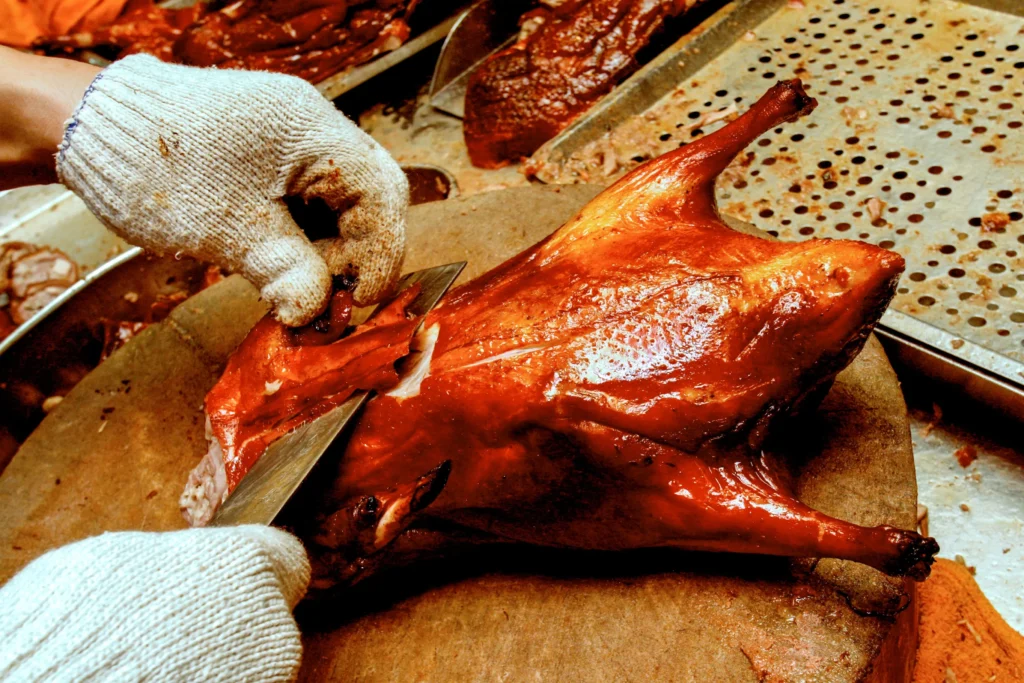
Peking duck originates from Beijing and dates back to the Yuan Dynasty (13th century). By the Ming Dynasty, it had become a celebrated imperial dish. Traditionally, chefs raised a specific breed of duck, air-inflated the skin to separate it from the fat, glazed it with maltose, and roasted it in a wood-fired oven.
The result?
- Paper-thin, glassy skin
- Deep mahogany color
- Tender, aromatic meat
- A ritual carving experience at the table
When you prepare this traditional Peking Duck recipe at home, you’re continuing a culinary legacy that spans centuries.
Ingredients for Traditional Peking Duck Recipe with Hoisin Sauce
Precision matters here. Each ingredient plays a functional role — not just flavor.
Main Duck Ingredients
| Ingredient | Quantity | Why You Need It |
|---|---|---|
| Whole Duck (5–6 lbs) | 1 | The foundation of the recipe |
| Honey | 2 tbsp | Adds caramelization |
| Rice Vinegar | 2 tbsp | Helps tighten and crisp skin |
| Chinese Five-Spice | 1 tsp | Traditional aromatic blend |
| Salt | 1 tbsp | Enhances overall flavor |
| Maltose (optional but authentic) | 2 tbsp | Gives glossy lacquered finish |
Homemade Hoisin Sauce Ingredients
| Ingredient | Quantity | Purpose |
|---|---|---|
| Soy Sauce | 4 tbsp | Salty umami base |
| Peanut Butter or Black Bean Paste | 2 tbsp | Body and depth |
| Honey | 1 tbsp | Sweetness |
| Rice Vinegar | 1 tbsp | Balances richness |
| Garlic (minced) | 1 clove | Aroma |
| Sesame Oil | 1 tsp | Nutty finish |
For Serving
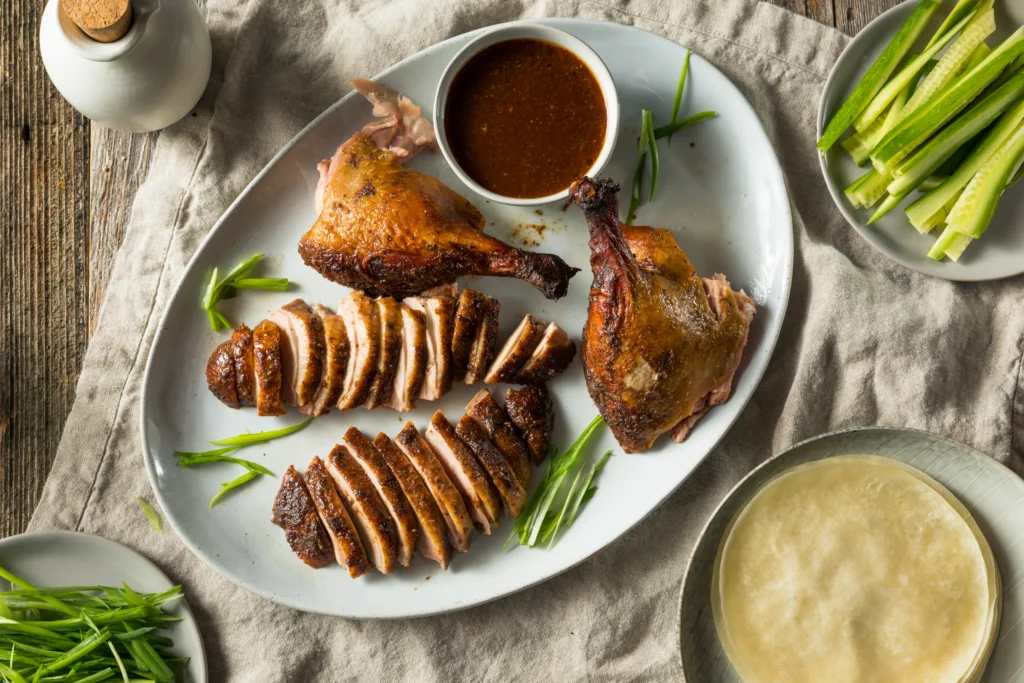
- Mandarin pancakes
- Julienned scallions
- Thin cucumber strips
- Extra hoisin sauce
How to Make Traditional Peking Duck (Step-by-Step)
Now we move to the heart of the Peking Duck recipe. The process is what creates that signature texture.
Step 1: Prepare the Duck for Crispy Skin
Crispy skin doesn’t happen by accident. It happens because you remove moisture and separate the fat from the skin.
Here’s how you do it:
- Rinse and thoroughly pat the duck dry.
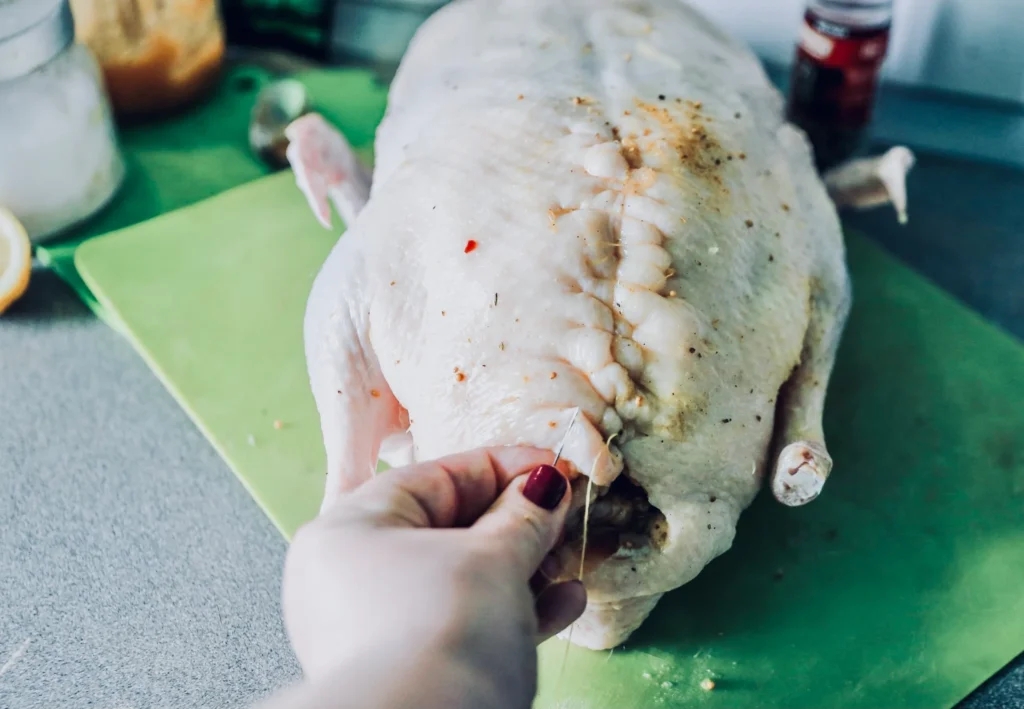
- Gently loosen the skin from the meat using your fingers.
- For authenticity, pump air between the skin and meat (a bicycle pump with a clean needle works surprisingly well).
- Mix honey and rice vinegar.
- Brush the glaze evenly over the duck skin.
Why this matters:
When you separate the skin from the fat, you allow the fat to render away during roasting. Less moisture = more crispness.
Step 2: Air-Dry the Duck
This is where patience comes in.
- Place the duck on a rack.
- Refrigerate uncovered for 12–24 hours.
- Ensure good air circulation.
If you skip this step, your Peking Duck recipe won’t achieve the classic brittle skin. Drying tightens the skin and removes surface moisture — the key to that iconic crackle.
Step 3: Season the Interior
While the outside dries, focus on the cavity:
- Rub inside with salt.
- Sprinkle Chinese five-spice.
- Avoid seasoning the exterior again — it should stay dry.
Step 4: Roast the Duck
Traditional ovens in Beijing use hanging wood-fired systems. At home, you can replicate excellent results in a standard oven.
Roasting Instructions:
- Preheat oven to 375°F (190°C).
- Place duck breast-side up on a rack over a tray.
- Roast for 60 minutes.
- Increase temperature to 425°F (220°C).
- Roast another 20–30 minutes until deep mahogany.
Target internal temperature: 165°F (74°C).
Visual cue: The skin should look shiny, blistered, and evenly browned.
Step 5: Rest and Carve
Let the duck rest for 15–20 minutes. Resting allows juices to redistribute.
Traditional carving sequence:
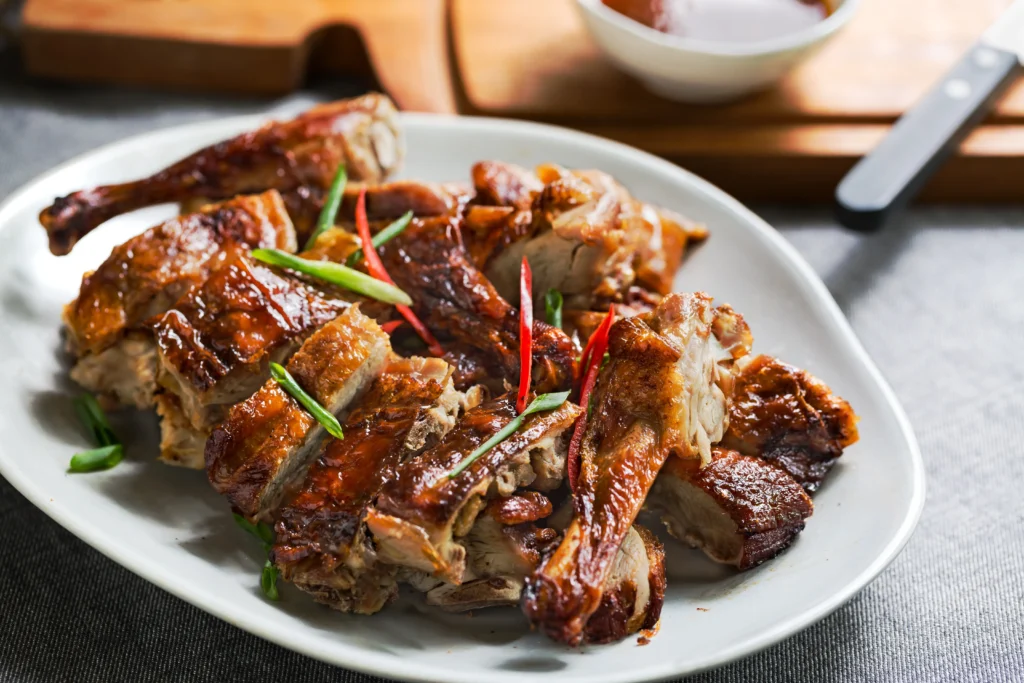
- Slice the skin first.
- Then carve thin slices of meat.
- Serve skin and meat separately if you want a restaurant-style presentation.
How to Serve Peking Duck with Hoisin Sauce
Serving is part of the experience.
Assembly Instructions:
- Spread hoisin sauce on a warm pancake.
- Add a slice of crispy skin.
- Add tender duck meat.
- Top with scallions and cucumber.
- Fold and enjoy.
You’ll notice the balance:
- Sweet hoisin
- Salty duck
- Fresh crunch of vegetables
- Delicate chew of pancake
That harmony is what defines a proper Peking Duck recipe.
Why the Skin Gets So Crispy (The Science Behind It)
Understanding the science improves your results.
Crispy skin requires:
- Moisture removal
- Fat rendering
- High heat finishing
When you air-dry the duck:
- Water evaporates
- Skin tightens
- Proteins concentrate
During roasting:
- Fat melts away
- Skin dehydrates further
- Sugars caramelize from the glaze
That’s how you achieve that signature snap.
Common Mistakes to Avoid
Even experienced home cooks sometimes struggle with this dish. Avoid these pitfalls:
- Skipping the drying step
- Not elevating the duck on a rack
- Overcrowding the oven
- Applying too much glaze
- Carving immediately without resting
Small details make a huge difference in your Peking Duck recipe.
Variations You Can Try
Once you master the traditional version, you can experiment.
Modern Adaptations
- Rotisserie-style Peking duck
- Air fryer mini duck
- Simplified 6-hour method
Sauce Variations
- Plum sauce instead of hoisin
- Sweet bean paste
- Spicy hoisin blend with chili oil
But if you want authenticity, stick to hoisin sauce and traditional pancakes.
Nutritional Overview
| Nutrient | Approximate Per Serving |
|---|---|
| Calories | 450–550 |
| Protein | 30g |
| Fat | 35g |
| Carbohydrates | 12g |
Duck is richer than chicken, but you’re eating it as part of a balanced serving with vegetables and thin pancakes.
Frequently Asked Questions About Peking Duck Recipe
Can you make this Peking Duck recipe without drying overnight?
You can, but the skin won’t be as crisp. A minimum of 6–8 hours helps significantly.
What makes a traditional Peking Duck recipe different from regular roast duck?
It’s the air separation technique, the drying process, and the thin pancake service style. Regular roast duck focuses more on seasoning and meat texture.
Is hoisin sauce necessary?
Traditionally, yes. Hoisin provides sweetness and depth that balances the richness of duck.
Can you prepare Peking Duck in advance?
You can dry it a day ahead. If reheating, use a hot oven or broiler briefly to restore crispness.
Why This Dish Is Worth Your Time
You could roast a chicken in 90 minutes and call it dinner. But when you decide to make a traditional Peking Duck recipe, you’re choosing craft over convenience.
You’re creating:
- A centerpiece meal
- A conversation starter
- A shared culinary memory
There’s something deeply satisfying about hearing your guests react to that first bite. The crispness. The sweetness of hoisin sauce. The tender meat wrapped perfectly in a warm pancake.
Final Thoughts: Mastering Your Peking Duck Recipe
The first time you make Peking duck, you might feel slightly intimidated. That’s normal. It’s a dish that rewards care. But once you go through the process, you’ll realize it’s not about complexity — it’s about precision and patience.
When you:
- Dry the skin properly
- Roast at the right temperatures
- Carve with intention
- Serve thoughtfully with hoisin sauce
You’ll produce a dish that rivals many restaurant versions.
Ready to Try This Traditional Peking Duck Recipe?
If you’ve been waiting for the right moment to attempt this classic, this is it. Gather your ingredients, clear your schedule for a slow, deliberate cook, and experience what makes this dish legendary.
And once you make it, don’t keep it to yourself.
Share your results. Invite friends. Turn it into a celebration.
Because a truly great Peking Duck recipe isn’t just something you cook — it’s something you share.