

There’s something magical about biting into a freshly baked French croissant. The delicate crunch of the outer layer gives way to a soft, buttery interior that almost melts in your mouth. If you’ve ever wondered why bakery croissants taste so heavenly, it’s not just the ingredients—it’s the technique. Today, you’ll learn how to recreate that authentic French croissant experience right in your own kitchen, impressing friends, family, or simply treating yourself to a taste of Parisian perfection.
Whether you’re a seasoned baker or a curious beginner, mastering the balance of a crispy outside and soft inside requires patience, precision, and a little insider knowledge. This guide will walk you through each step, from choosing the right ingredients to perfecting the lamination and baking techniques. By the end, you’ll be confident in creating croissants that are indistinguishable from those in a French patisserie.

What Makes a French Croissant Authentic?
The History of the French Croissant
Understanding the origin of the French croissant adds depth to your baking journey. Croissants trace their roots back to the Austrian kipferl, a crescent-shaped pastry enjoyed in Vienna. When this concept traveled to France in the 19th century, French bakers elevated it into the delicate, layered pastry we now adore. Croissants became a staple of French breakfasts, symbolizing both culinary sophistication and everyday indulgence.
Key Ingredients for Authenticity
The foundation of a perfect French croissant lies in high-quality ingredients. Each component plays a crucial role in achieving that signature flakiness and rich flavor.
| Ingredient | Purpose |
|---|---|
| Butter | Provides flavor and creates flaky layers |
| Flour | Forms the structure and supports gluten development |
| Yeast | Leavens the dough for a light, airy texture |
| Milk | Adds moisture and tenderness |
| Sugar | Enhances flavor and aids caramelization |
| Salt | Balances sweetness and enhances overall taste |
| Egg | Used for egg wash to achieve a golden, shiny crust |
For the best results, use European-style butter, known for its higher fat content, and high-quality flour that can withstand the folding and rolling process.
Step-by-Step Guide to Making French Croissants
Preparing the Dough
- Combine Ingredients: Mix flour, sugar, salt, and yeast in a large bowl. Gradually add milk to form a smooth dough.
- Knead the Dough: Knead for 8–10 minutes until the dough is elastic.
- Rest and Rise: Cover the dough and let it rest at room temperature for 1–2 hours until it doubles in size.
Tip: Temperature is key—too warm, and the butter will melt; too cold, and the yeast won’t activate properly.
Laminating the Dough
Lamination is what gives croissants their iconic flaky texture.
- Prepare the Butter Block: Roll butter into a flat rectangle.
- Encase the Dough: Place the butter on the dough and fold it like a letter.
- Folding Process: Repeat the roll-and-fold technique 3–4 times, chilling the dough between folds to maintain butter consistency.
Pro Tip: Keep all surfaces lightly floured but avoid excess flour, which can dry out the dough.
Shaping the Croissants
- Roll the dough into a large rectangle and cut it into triangles.
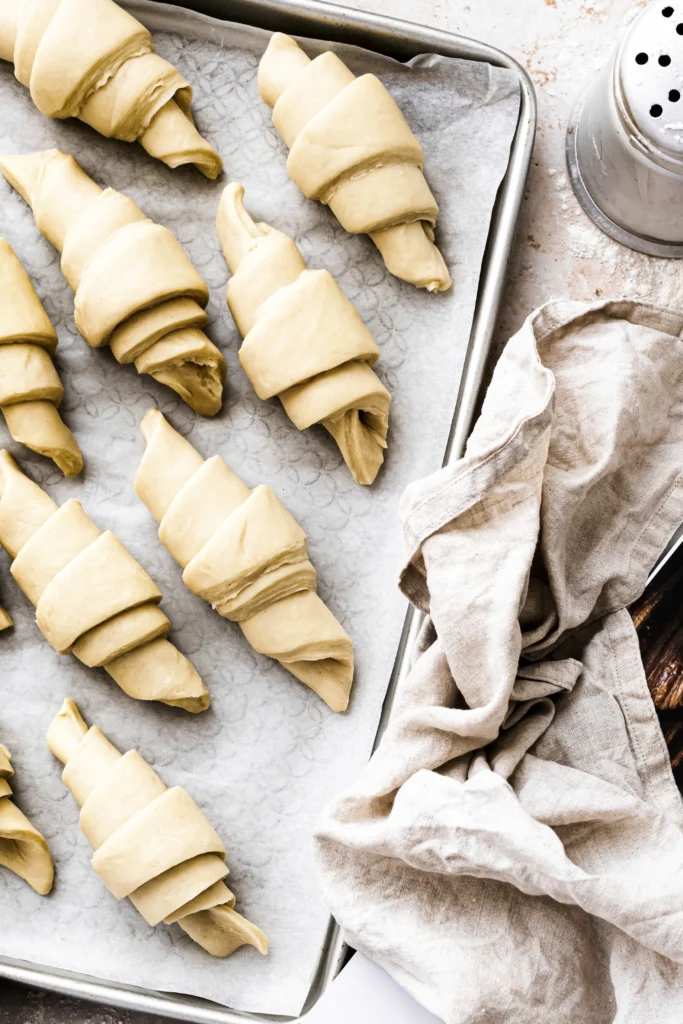
- Roll each triangle from base to tip, creating the classic crescent shape.
- Place the shaped croissants on a parchment-lined baking sheet, ensuring enough space for expansion.
Proofing for the Perfect Rise
Allow your croissants to proof until slightly puffy and jiggly to the touch. Proper proofing ensures a soft, airy interior. Ideal conditions include a warm, humid environment around 75°F (24°C).
Baking the Croissants
- Preheat your oven to 375°F (190°C).
- Brush the croissants with egg wash to achieve a golden crust.
- Bake for 15–18 minutes or until the tops are golden brown and crisp.
| Oven Temp | Baking Time | Result |
|---|---|---|
| 375°F / 190°C | 15–18 min | Soft interior, slightly golden |
| 400°F / 200°C | 12–15 min | Flakier crust, deeper golden hue |
Tip: Rotate trays halfway through baking to ensure even browning.

Tips for Perfect French Croissants
- Use Cold Ingredients: Prevents butter from melting during lamination.
- Avoid Overworking the Dough: Over-kneading can make croissants tough.
- Rotate Trays: Ensures even heat distribution in the oven.
- Be Patient: Lamination and proofing are key to achieving layered perfection.
- Storage: Croissants are best enjoyed fresh but can be frozen unbaked and baked later.
Common Mistakes to Avoid
- Dense Croissants: Usually due to under-proofing or overly soft butter.
- Butter Leakage: Happens when dough is too warm or folded improperly.
- Uneven Layers: Caused by inconsistent rolling or folding.
Avoiding these mistakes ensures you get that professional bakery quality at home.
FAQ: Authentic French Croissant Recipe
Q1: Can I make croissants without butter?
A: Butter is essential for authenticity. Margarine or plant-based alternatives will not give the same flaky texture or rich flavor.
Q2: How long does it take to make French croissants?
A: From start to finish, expect 4–6 hours, including dough resting, lamination, proofing, and baking.
Q3: Can I freeze croissants?
A: Yes. Freeze unbaked croissants on a tray, then transfer to a freezer bag. Bake directly from frozen, adjusting time slightly.
Q4: Why are my croissants not crispy outside?
A: Likely underbaked, or you skipped the egg wash. Ensuring oven temperature and proper egg wash will solve this issue.
Conclusion
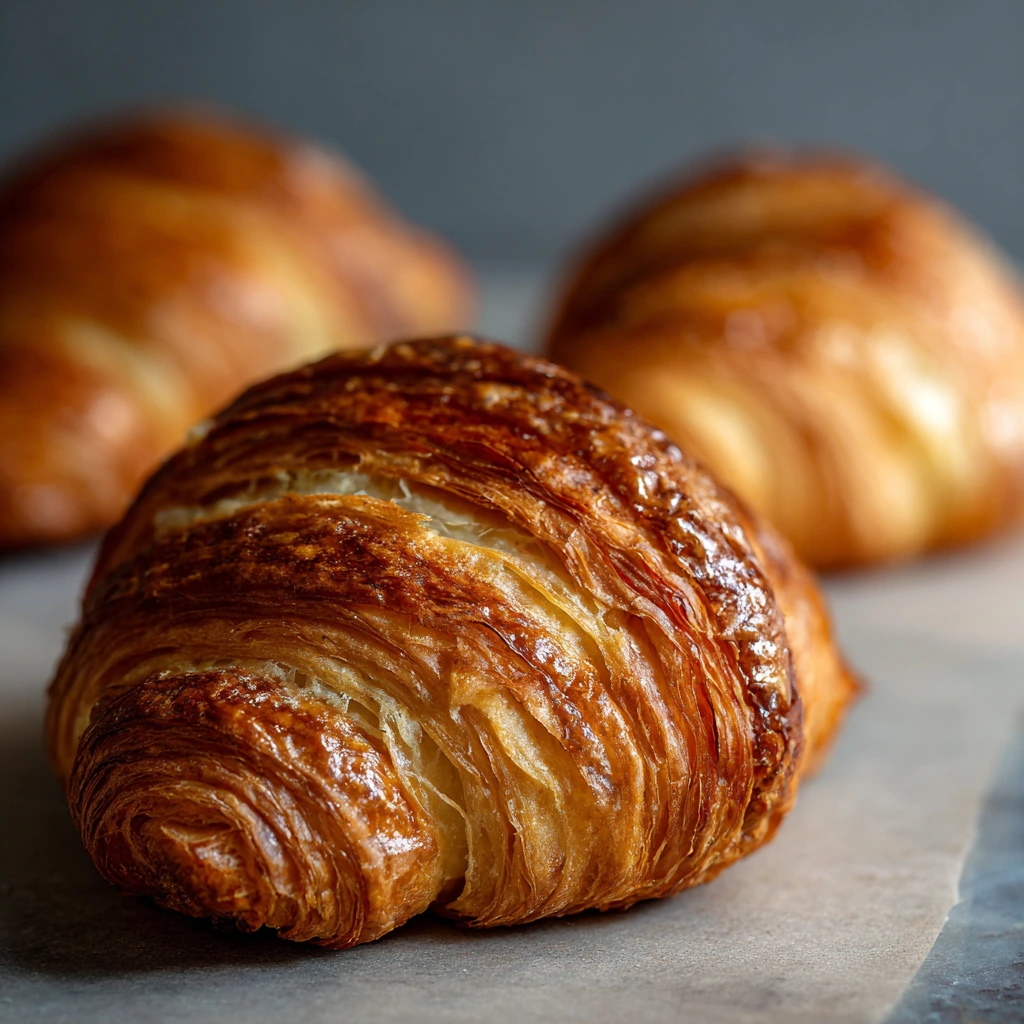
Making authentic French croissants is a rewarding journey that combines patience, precision, and a love for baking. By focusing on high-quality ingredients, mastering the lamination technique, and carefully proofing and baking, you can achieve that coveted contrast: a crispy, golden exterior and a soft, airy interior.
Remember, croissants are as much about process as the product. With practice, your kitchen can rival the finest Parisian patisserie.
Now it’s your turn—roll up your sleeves, preheat the oven, and bring a little bit of France to your table. And don’t forget to share your first batch of homemade French croissants with friends, family, or even on social media—you’ve earned it!
Keywords naturally included: French Croissant, Authentic French Croissant Recipe, Crispy Outside Soft Inside, Homemade Croissants, French Pastry.
Call to Action: Encourage readers to bake, share photos, and comment with their experience.
Table of Contents
How to Make Bagels from Scratch: Step-by-Step Guide – labelrecipes.com